Why You Can't Just Use Your Own Agents to Build Compliance Data
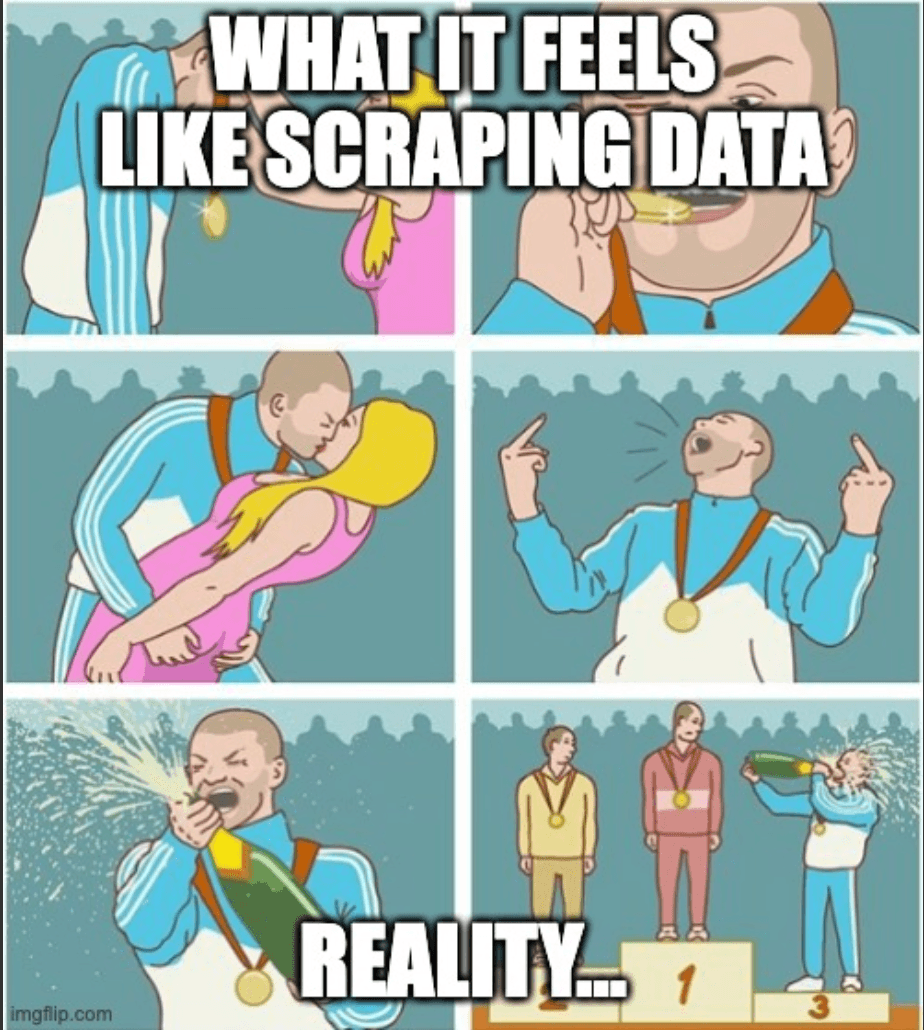
Scraping is easy. Operating truth is the job. Agents can discover signals, but compliance needs defensible truth.
Why You Can't Just Use Your Own Agents to Build Compliance Data
Scraping Is Easy. Operating Truth Is the Job.
Agents can discover signals. Compliance needs defensible truth.
TL;DR
You can point agents at the internet and generate risk data quickly. What you cannot do cheaply is operate that data as a product over time. Definitions evolve, sources drift, duplicates multiply, and edge cases become your backlog. Then the hard questions arrive: can you reproduce what you knew at the time, show your sources, explain changes, and measure quality?
That is the real divide between an agent demo and compliance-grade data infrastructure.
Pergamon layers systems, QA, and policy-literate review on top of agent discovery so the output is suitable for production use in compliance workflows.
The Demo Is Not the Product
The demo is: "Look, we pulled 50,000 records overnight."
The product is: "We can defend decisions made six months ago, and we can explain every change since."
That second sentence implies you can do all of the following without hand-waving:
- reproduce what the system saw at the time
- show the underlying sources
- explain why a record exists
- explain why it changed
- ship updates without breaking downstream workflows
In compliance, shipping a dataset is easy. Maintaining trust is the job.

Why "Just Use Agents" Gets Expensive
Agents dramatically reduce the cost of discovery. They do not reduce the cost of governance. In practice, they often increase it, because you can now generate data debt faster than you can pay it down.
Most teams underestimate the ongoing work required to keep the dataset stable and defensible:
- keeping definitions consistent
- handling drift and source changes
- resolving identity and duplicates
- measuring quality and error rates
- publishing changes safely
If you are not prepared to operate those functions continuously, "we will just run agents" becomes a costly promise.
The Practical Limits of DIY Agents
1) Definitions are not stable, and agents do not agree by default
Across risk domains, the hardest work is deciding what counts. The world does not publish clean categories, and different agencies use the same words to mean different things. Agents can infer, but they will not infer consistently unless you enforce a definition system.
You see this immediately with questions like:
- What qualifies as an enforcement action vs an investigation vs a settlement?
- What is a watchlist record vs a mention vs a reference?
- What is a governance signal vs normal corporate noise?
- What is state-owned vs state-influenced, and under what threshold?
This is also where many false positives are born, not in your matching engine, but upstream in inconsistent definitions and category leakage.
2) Real-time can be a competitive advantage, but speed alone is dangerous
Real-time can be a competitive advantage. The issue is that compliance data also needs accountability: what you knew, when you knew it, and what source supports it. Agents can move quickly, but without provenance and QA, speed can turn into risk.
If your system cannot answer "why is this record here?" you will eventually be forced to turn it off, no matter how fast it is.
3) Source drift is constant, and drift looks like silent failure
Official sites get redesigned. PDFs get replaced. Pages move. Formats change. Robots rules shift. Your pipeline can keep running and still be failing quietly, and you only notice later when coverage drops or records change unexpectedly.
To survive drift, you end up needing:
- monitoring and alerting
- fallbacks and source redundancy
- anomaly detection
- reprocessing policies
- review queues
The agent run is not the expensive part. Drift management is.
4) Entity resolution is not optional
Most compliance datasets are not just lists. They are identity problems. You need to reliably answer:
- is this the same person as that?
- is this subsidiary linked to the right parent?
- is this spelling variant an alias or a different entity?
- is this "role" a title, a department name, or a mistranslation?
Agents can extract attributes. They cannot guarantee identity. If you do not invest in entity resolution, you pay for it later in alert volume, escalations, and brittle thresholds.
5) Coverage requires maps, not just crawlers
A common failure mode is confusing "we found a lot" with "we are complete." Coverage is a systems question. To claim you cover something, you need a canonical inventory of the space and a way to detect gaps.
Without coverage maps, you cannot answer:
- what do you cover?
- what do you not cover?
- how do you know?
6) Quality must be measurable, not assumed
"Looks good" is not a QA strategy. Compliance-grade data needs measurement and repeatability:
- an error taxonomy
- sampling and review policies
- consistency checks
- release gates
Without measurement, you end up with high confidence and low truth, and errors compound.
7) Change management is part of the dataset
Even if you solve discovery, definitions, drift, identity, and QA, one question remains: how do you ship changes safely?
Customers will notice when records shift categories, identifiers change, relationships appear or disappear, or profiles get consolidated. You need versioned releases, change logs, and "as-of" reproducibility. This is the difference between a dataset and a product.
The Pergamon Approach: Agents Plus Governance
Pergamon is not "agents instead of humans." Pergamon pairs agent discovery with definition work, QA, and review workflows to produce data that is suitable for compliance use in production.
We treat the dataset as infrastructure.
In practice, that means agents help us go deep into domains and pull primary sources efficiently, including quiet datasets that never arrive through clean APIs. But agent output is raw material, not truth. We combine automated discovery with policy-literate review to resolve ambiguity and prevent category leakage, then we apply consistent definitions so the output behaves predictably across jurisdictions and edge cases.
We also cross-map datasets so the system can reason, not just list. That improves linking, reduces duplicates, and makes coverage measurable. Finally, we treat reproducibility as a first-class requirement with evidence tied to key assertions, QA embedded in the pipeline, versioned releases, and change logs.
Data Is Infrastructure, Not a File
High-signal risk data does not arrive as a clean API. It lives across registries, disclosures, PDFs, portals, and formats that change without warning. Agents help collect and extract, but collection is only the beginning.
What matters is whether the output behaves like infrastructure: evidence attached, definitions applied consistently, quality measured, and updates shipped predictably. That is how data becomes something you can operate, audit, and trust.
Closing Thought
You can build this in-house. Just be honest about what you are signing up for.
It is not "run agents and get a list." It is operating a living data layer with definitions, provenance, QA, and versioning, continuously.
Pergamon exists so you do not have to build that infrastructure under fire.
© 2026 Pergamon Labs - Operating truth at scale.